Vision Impairment and Handicap Parking Placards: HandicapMD Publishes Certification and Application Guide
HandicapMD explains vision-related parking criteria, authorized certification, accessible paperwork, and applications
Press Release Disclaimer: This is a press release distributed through the XPR Media network. It has not been independently verified by our newsroom.
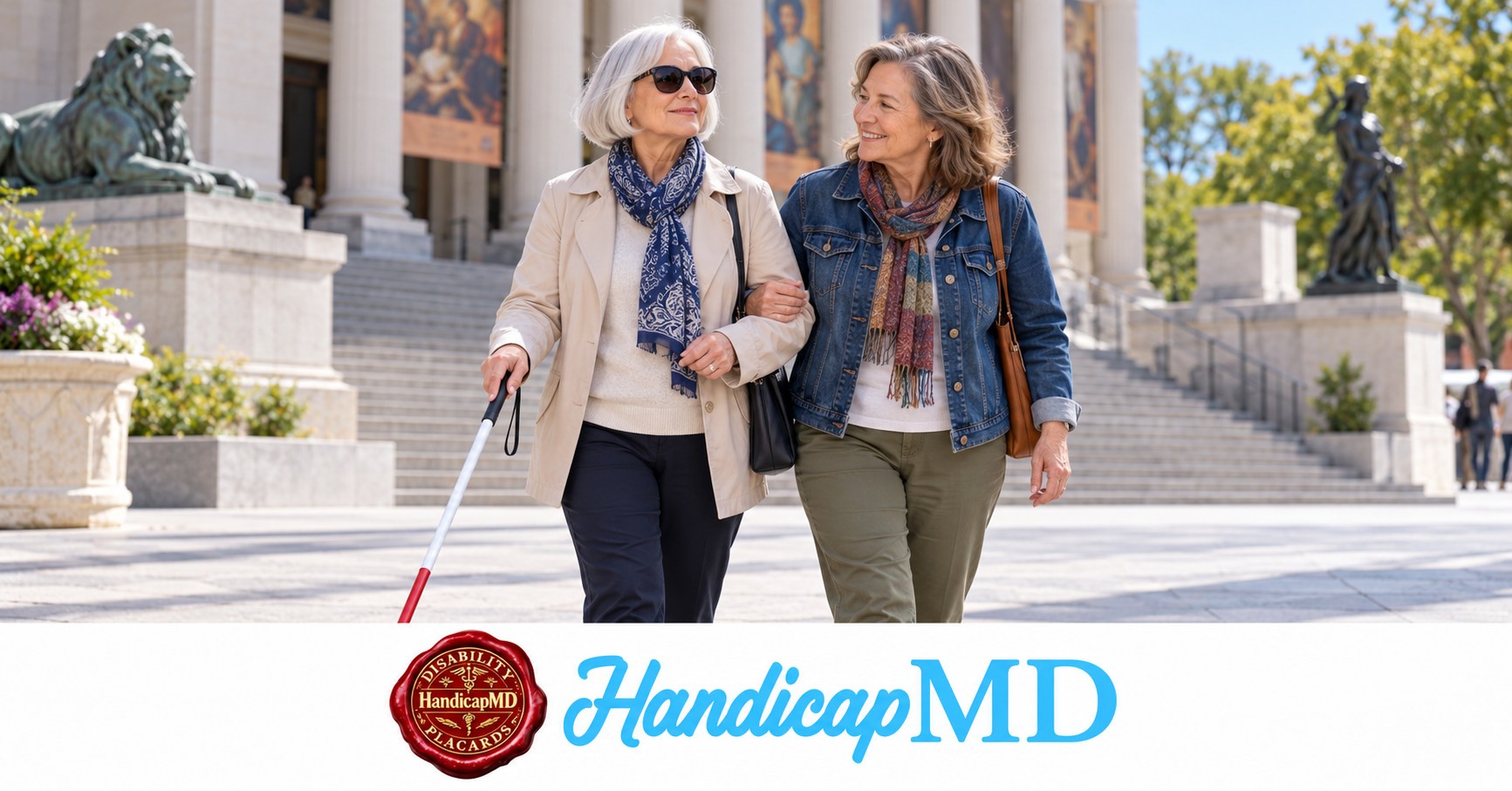

HandicapMD explains vision-related parking criteria, authorized certification, accessible paperwork, and applications for passengers.
WASHINGTON, DC, UNITED STATES, November 9, 2026 /EINPresswire.com/ — HandicapMD is publishing a certification and application guide about vision impairment and handicap parking placards. The educational resource helps readers separate a documented vision criterion from assumptions about driving, wheelchair use, or the appearance of a disability. It emphasizes the current jurisdiction’s requirements and the assessment of an authorized professional, with practical preparation for applicants who travel as passengers or need help reading paperwork.
The vision impairment parking application guide explains how to identify the relevant medical question and the office that handles the application. Readers can visit HandicapMD for information about independent evaluations and consult the national handicap parking eligibility guide for broader context. The resource does not declare every eye diagnosis eligible, create a new government benefit, or establish that a particular person meets a visual standard.
Vision and parking involve more than driving
A person can have a meaningful disability parking need while someone else operates the vehicle. The journey continues after the passenger leaves the seat: locating an entrance, understanding the approach, and meeting a companion after the visit can all require planning. The presence of a wheelchair symbol should not lead observers to assume that only people using wheelchairs can qualify.
New York’s published program information, for example, includes legal blindness among its qualifying permanent categories and explains that a permit applicant need not be a licensed driver or own a vehicle. That is a specific jurisdictional example. Applicants elsewhere should check their own issuing authority rather than assuming the same categories, documentation, or submission arrangements apply nationally.
The guide distinguishes a parking application from driving fitness. A parking credential does not authorize a person to drive or replace licensing requirements. Someone who has questions about driving and vision should address them through the appropriate clinical and licensing processes. The educational resource concerns disability parking preparation, including situations where the eligible applicant is a passenger throughout the trip.
Use the vision criterion on the actual application
Vision requirements can refer to particular findings, duration, or functional circumstances. An eye condition’s name does not necessarily answer those requirements. Maryland, for example, publishes a defined permanent vision category involving both eyes and specified acuity or field findings. Readers should have an authorized professional interpret the actual wording rather than choosing a threshold from a general internet discussion.
Keep measurements attached to their context, including the eye assessed, the date, and whether the report describes correction. Do not turn an uncorrected reading into a corrected result or treat a number from one eye as though it necessarily describes the other. The clinician reviewing the application decides which findings answer the program’s question and whether further information is needed.
Routine use of glasses, a recent appointment, or an eye diagnosis should not be presented as an automatic parking qualification. The relevant distinction is the supported impairment recognized by the program. If a reader is unsure what a report means, the useful next step is to ask the eye care practice or evaluating clinician, not to convert the result into a legal conclusion independently.
Choose a professional authorized for the category
State programs can specify which professions may certify vision-related applications. Maryland’s VR-210 instructions, for instance, limit an optometrist’s certification to qualifying vision conditions. That does not establish authority for every other medical category. Applicants should identify both the professional’s permitted scope and whether the available assessment supports the particular statement required on the form.
If a person already sees an eye care professional, ask whether that practice handles the relevant certification and what it needs beforehand. Send the complete current application with its instructions. A request described only as a DMV eye form may be misunderstood because licensing vision forms and disability parking applications can be different documents with different purposes and recipients.
An online appointment should not be assumed to replace a necessary eye examination or provide measurements that have not been obtained. The evaluator determines whether the available format and records are adequate. Asking that question before booking can help the applicant understand the next step. A service should not promise a signature or an eligibility result before reviewing the relevant information.
Make records accessible to the applicant
Preparation should use a format the person can read or understand. A helper might locate the official form, enlarge text, read instructions aloud, or organize a document list, depending on the applicant’s preferences. Ask which assistance is useful rather than assuming a companion should take over the entire process. The applicant should have room to ask questions and correct information.
When a scanned document is difficult to use, contact the organization responsible for it about available assistance or another format. Do not guess at an unreadable field. A magnified photograph may help with one passage while leaving another page missing, so confirm the complete application is available. If a signature or representative procedure is needed, follow the issuing office’s actual instructions.
Keep an accessible copy of important contact details and submission information. A document stored only in a relative’s account may be unavailable when the applicant wants to follow up independently. Decide together how records will be organized and who can access them. Practical assistance should make the task understandable while respecting the person’s control over identifying and medical information.
Describe the transportation situation clearly
A useful account can explain how the person travels, what assistance they normally use, and which part of the approach raises the parking question. It need not portray the person as unable to do every activity. Describe the specific circumstances accurately, including the supports that make a task possible. An observer’s brief view of someone walking does not reveal the entire situation.
For a hypothetical passenger, the important preparation might be explaining how a companion helps identify the correct entrance after leaving a vehicle. Another person might need a destination to describe the route from a designated drop off point. These are planning examples, not claims that either person qualifies. A clinician assesses the medical question, and the issuing program decides the credential.
Ask destinations about the actual approach instead of assuming a reserved parking space solves every access need. Confirm the entrance, where the companion can meet the passenger, and whether a route changes during construction. The responsible operator can explain its facilities. That answer is useful for transportation planning without becoming a medical assessment or a guarantee that a space will be available.
Separate the personal permit from the vehicle
The applicant’s identity should remain clear even when someone else drives or completes parts of the paperwork. A caregiver should not substitute their own medical information for the passenger’s or assume that driving creates eligibility. Read whether vehicle information is requested for plates, a personal placard, or another product. A field that applies to one transaction may not apply to another.
New York illustrates the administrative distinction by directing personal permit applicants to their local issuing agent while DMV handles disability plates. Local instructions can affect the form and submission route. Identifying the correct recipient before mailing documents can avoid an application reaching an office that does not issue the requested product. Other jurisdictions have their own arrangements and must be checked separately.
When several relatives provide transportation, agree how the eligible person’s credential will accompany that person under applicable rules. A personal placard should not become a general household parking pass. Questions about display, supporting identification, replacement, or use in another vehicle belong with the issuing authority. Educational guidance should not replace the instructions supplied with the actual credential.
Duration and application status need distinct attention
An eye condition may require ongoing care while the parking program asks a particular question about permanence or expected duration. The certifier addresses that question using supported information. The applicant should not choose a permanent category merely because treatment is continuing, nor assume that a recent procedure automatically supports a temporary category in every jurisdiction.
Keep the next eye appointment separate from the application deadline and any credential expiration. Those dates represent different responsibilities. If an existing credential is nearing expiration, identify the renewal transaction and current instructions rather than assuming another initial examination is always required. Conversely, an appointment scheduled after expiration does not extend parking privileges while the person waits.
A submitted request is not the same as an issued credential. Retain the confirmation and ask the responsible office how to follow up. If an application is returned, identify the specific issue before collecting more clinical records. A missing signature or an unreadable address may require a focused correction, while a medical question should return to the authorized professional.
Protect the information used for certification
Eye reports can contain personal details unrelated to the parking request. Ask the evaluator which documents it needs and use the designated private delivery method. The government office may require a completed certification rather than an entire eye care record. Keeping the clinical packet separate from the administrative submission can make both more useful while limiting unnecessary disclosure.
If a helper is reading information aloud, agree on the setting and what the applicant wants shared. The applicant may prefer to discuss a detail directly with the professional. A family itinerary can record pickup times and meeting points without reproducing medical measurements. Assistance should be connected to the task, not treated as permission to distribute every document to every traveler.
Review the completed application in the applicant’s preferred format. Check identifying details, dates, the requested product, and the presence of required signatures. Do not edit a signed medical finding or add a new limitation to strengthen the request. If something is unclear or incorrect, ask the signer to explain or correct it through the appropriate process before submission.
An organized call to the issuing office
Before contacting an office, write the transaction in a short sentence: an initial personal placard, a renewal, or a replacement. Then identify the unanswered question, such as which identity document is accepted from a passenger who does not drive. The caller can request instructions in a usable format and confirm which pages need to be submitted.
Record the answer with the date and the office that supplied it. If a companion makes the call, review the information together afterward. Do not turn an explanation of submission steps into a promise of approval. The purpose of the call is to clarify the administrative task so the applicant can complete it accurately. If the answer concerns a medical finding, ask which part should be discussed with the certifier before any document is changed or another appointment is arranged. Keep that question visible until it is answered.
About the vision impairment guide
HandicapMD’s resource supports a more precise conversation about documented vision impairment, state criteria, and the practical steps of applying. It recognizes that applicants can be passengers and that readable instructions matter. The company is independent of issuing agencies. The guide does not grant parking privileges, guarantee certification, claim government endorsement, or substitute an eye diagnosis for the assessment the relevant program requires.
Readers can begin by identifying the issuing jurisdiction, locating its current application, and asking the appropriate professional what existing findings are relevant. If assistance is needed to read or complete a document, identify that need early with the receiving organization. The aim is an understandable process that preserves the applicant’s voice and leaves clinical judgment and issuance decisions with those responsible for them.
About HandicapMD
HandicapMD provides online medical evaluations related to disability parking certification. When supported by the clinical assessment and applicable requirements, a licensed clinician completes the medical portion of the relevant application. The company’s educational resources explain state processes and help residents prepare questions. Government agencies retain responsibility for reviewing applications and issuing parking credentials.
https://www.handicapmd.com/
Crystal Dennon
HandicapMD
help@handicapmd.com
Visit us on social media:
Instagram
Facebook
YouTube
Surprising Facts About Handicap Placards – Not Just for People Who Use Wheelchairs
Legal Disclaimer:
EIN Presswire provides this news content “as is” without warranty of any kind. We do not accept any responsibility or liability
for the accuracy, content, images, videos, licenses, completeness, legality, or reliability of the information contained in this
article. If you have any complaints or copyright issues related to this article, kindly contact the author above.

Media gallery